
In architectural glass installations, visual attention naturally gravitates toward large, clear glass expanses and clean aluminum or composite frame profiles. What remains unnoticed behind the weatherstrip rebate is the mechanical network responsible for making the assembly functional: the window hardware.
Far from being mere accessories, hinges, multi-point locksets, corner drives, operators, and handles are the hardest-working load-bearing assemblies in any window system. As architectural designs lean into larger dimensions, heavier acoustic laminates, and tighter energy standards, the structural demands placed on this internal hardware have never been higher.
For window manufacturers, system fabricators, and commercial contractors, selecting an engineering-focused hardware supplier is the baseline requirement for building envelope longevity.
1. The Physics Behind the Sash: Load, Torque, and Deflection
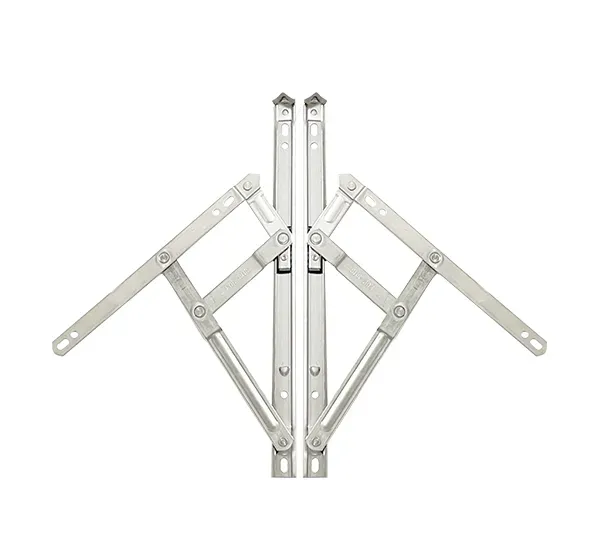
Every operable window is essentially an engineered lever arm. When a window sash opens, the entire dead load of the insulated glass unit (IGU)—often exceeding 100 kg to 250 kg in modern commercial configurations—is transferred through a footprint of just a few square centimeters of steel.
A common failure mode in lower-grade fenestration is sash drop (deflection over time). When low-tensile alloys or poorly heat-treated rivets are used in friction hinges or pivot arms, the metal undergoes plastic deformation under sustained gravitational pull. The result:
- The sash rubs against the lower frame sill.
- Perimeter gasket compression becomes uneven, letting air and water bypass the seal.
- Operating torque spikes, making handles stiff and susceptible to internal gear shear.
By contrast, using high-tensile austenitic stainless steel (such as 304 or 316 grades), precision-stamped link arms, and case-hardened bearing pins keeps sash deflection within fractions of a millimeter over hundreds of thousands of duty cycles.
2. Air, Water, and Acoustic Performance: The Sealing Equation
Thermal and acoustic ratings (such as U-values and STC/OITC sound transmission loss) are calculated under laboratory conditions with brand-new, perfectly sealed specimens. In the field, performance over time depends on continuous gasket compression.
Under negative wind loads, wind rushing past a facade creates dynamic suction that pulls the window sash away from the frame. If the hardware only secures the center edge via a single-point latch, the top and bottom corners bow outward:
- Air Infiltration: Conditioned air escapes, and unconditioned exterior air breaches the interior envelope, rendering thermal barrier calculations irrelevant.
- Water Penetration: Driven rain penetrates the frame rebate, overwhelms the internal weep channels, and seeps into wall cavities.
- Acoustic Bridging: Sound waves exploit the micro-gaps around the uncompressed perimeter, eliminating the noise-reduction benefits of expensive laminated glass.
A precision multi-point espagnolette system neutralizes this problem by syncing adjustable mushroom-head cams along the sash perimeter. Engaging the handle drives these cams into structural zinc or steel strike keepers simultaneously, locking the perimeter tight against the frame seals and keeping air and water barriers intact during severe weather.
3. Metallurgy and Surface Protection: Surviving Micro-Environments
Window hardware operates in demanding local microclimates. The space between the sash and frame rebate frequently traps ambient humidity, acidic condensation, and airborne particulates. In coastal areas, high salt concentrations rapidly accelerate galvanic and pitting corrosion.
A supplier’s core competency lies in material science and multi-stage surface treatments:
| Component Type | Substrate Material | Surface Treatment / Coating | Environmental Rating |
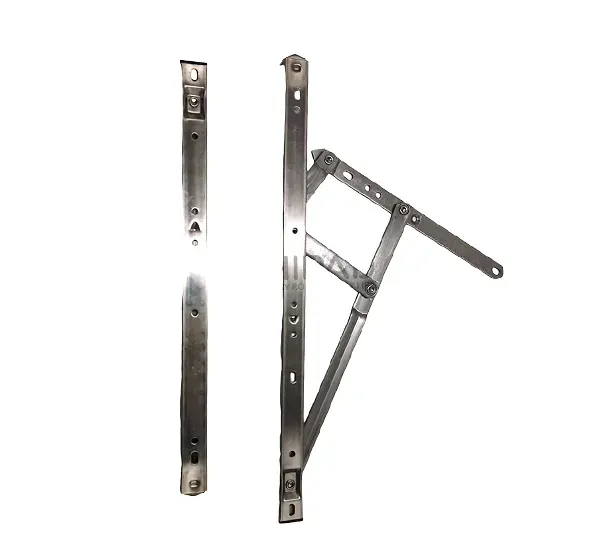
| Heavy-Duty Friction Stays | 304 / 316 Austenitic Stainless Steel | Passivated & Electropolished | EN 1670 Grade 5 (480+ hrs salt spray, high salinity resistant) |
| Drive Rods & Gear Tracks | Carbon Structural Steel (Q235 / C45) | Multilayer Zinc-Nickel + Organic Nano-Sealant | Hexavalent chromium-free, 720+ hrs ASTM B117 salt spray |
| Transmission Gearboxes | High-Purity Die-Cast Zinc Alloy (Zamak 5) | Electro-galvanized with internal PTFE dry lubricant | High torque tolerance, self-lubricating, wear-resistant |
| Architectural Handles | Forged Aluminum Alloy / Zinc Alloy | Anodized (15-20µm) or Electrostatically Powder-Coated | AAMA 2604 / 2605 compliant, UV stable, scratch resistant |
Preventing Galvanic Corrosion
When stainless steel fasteners or pivot assemblies contact aluminum profiles in humid conditions, galvanic corrosion will degrade the softer aluminum. High-grade hardware mitigates this by integrating engineered composite isolation sleeves, high-density nylon friction pads, and inert barrier coatings that break electrical conductivity between dissimilar metals.
4. Key Window Typologies and Hardware Kinematics
Different opening styles introduce distinct mechanical challenges. Precision-machined components allow fabricators to deliver smooth operation across various formats:
Tilt-and-Turn Systems (European Style)
The most versatile configuration requires the tightest machining tolerances. A single handle controls three distinct operating modes:
- Zero Degrees (Down): Multi-point perimeter locked.
- Ninety Degrees (Horizontal): Side-hung turn mode for wide-angle egress and cleaning.
- One-Hundred-Eighty Degrees (Up): Top-tilt ventilation, allowing warm air to exit while preventing rain ingress.
Integrated sash lifters, anti-mishandling locks (preventing handle movement while the sash is open), and corner drives with layered spring steel sheets ensure fluid shifting without mechanical binding.
Heavy-Duty Parallel and Casement Stays
For modern outward-opening casement or awning facades, scissor-action friction stays support the outward-projecting weight of the sash. These stays must resist both heavy downward gravity loads and upward buffeting winds. Adjustable friction slider shoes incorporate glass-fiber reinforced nylon to maintain smooth resistance without chatter or slipping.
Lift-and-Slide Hardware for Giant Panels
Standard sliding doors generate high friction as the bottom rollers drag across continuous weatherstrips. Lift-and-Slide systems solve this mechanically:
- Rotating the drive handle levers internal gear bogies downward.
- The entire multi-hundred-kilogram sash lifts upward by 5 to 8 mm off the bottom gasket.
- The door glides smoothly across polished stainless steel rails on tandem precision ball bearings.
- Returning the handle to the closed position drops the door’s full weight back down onto heavy elastomeric seals, delivering high weather and sound insulation.
5. The Manufacturing Advantage: How We Support B2B Fabricators
For window factories, facade contractors, and brand owners, high-performance hardware must be matched by a dependable, scalable supply chain. Sourcing directly from an established hardware manufacturer offers distinct operational advantages:
Profile Compatibility and Custom Tooling
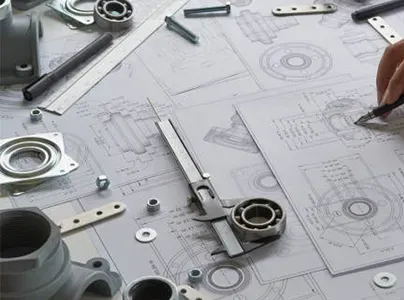
Whether your factory uses standard European 15/20mm Eurogrooves, customized aluminum thermal-break extrusions, or North American PVC profiles, hardware must match channel profiles within tenths of a millimeter. Our engineering team designs custom-milled strike plates, profile-matched hinge leaves, and specific gear backsets (15mm to 50mm) to eliminate line fitting issues during final assembly.
Assembly-Line Efficiency
Labor cost is a central operational variable in window manufacturing. Our hardware focuses on quick-mount installation features:
- Snap-lock locator pins that index into standard pre-drilled holes.
- Non-handed, symmetrical components that reduce SKU counts and eliminate workstation assembly errors.
- Pre-set clip systems that avoid complex measurement runs during shift work.
Exhaustive Cycle and Load Validation
Before a production run leaves our facility, components are tested using automated load-simulation rigs:
- Mechanical Cycle Testing: Cycled through 25,000 to 50,000 continuous open-tilt-close cycles under full design weight (conforming to EN 13126 and AAMA 901 standards).
- Forced-Entry Security (RC2/RC3 & PAS 24): Tested using hydraulic ram, pry-bar, and lever-wedge testing to ensure hardware retains sashes under burglary attempts.
- Continuous Environmental Exposure: Salt fog exposure testing running in parallel to verify surface plating integrity.
The Foundation of Architectural Quality
When clients inspect a finished building, their hands touch the window handle. They feel the solid mechanical engagement, the effortless rotation of the espagnolette, and the quiet glide of the sash as it compresses the weather seals. That direct, tactile sensation is where perceived quality is established.
A window can have high-spec glass and advanced thermal frames, but if the hardware is compromised, the entire window system will ultimately fail in the field.
By building our manufacturing operations around metallurgy, structural kinematics, and tight tolerance manufacturing, we supply the core mechanical systems that allow modern architectural glazing to perform smoothly year after year.
Ready to elevate your fenestration line? Connect with our technical engineering team to request CAD models, custom tooling consultations, or direct product sample kits for your fabrication line.