
In contemporary architectural design, windows are no longer simple openings cut into walls to admit daylight and fresh air. They are complex building envelope components engineered to meet stringent thermal standards, withstand extreme weather events, deliver acoustic comfort, and provide reliable security. Yet, while profiles (aluminum, UPVC, timber, or thermal-break composites) and insulated glass units (IGUs) dominate structural discussions, neither can function without a third critical component: precision-engineered window hardware.
Hardware is the functional backbone of any fenestration system. It transforms stationary glass and framing into dynamic, operable assemblies capable of withstanding decades of physical load and environmental stress. For commercial developers, window fabricators, and architectural specifiers, selecting the right manufacturing partner for window hardware is a strategic decision that directly influences project margins, safety ratings, and long-term brand equity.
1. Defining the Core: Why Hardware Dictates Window Performance
A window’s laboratory ratings—such as air permeability, water tightness, and wind load resistance—are largely realized at the contact interface between sash and frame. Even the most advanced multi-chamber profile or triple-glazed unit fails if the hardware cannot compress weather seals evenly along the entire perimeter.
Air and Water Tightness
Modern high-performance fenestration relies on multipoint locking systems. Unlike traditional single-point latches that leave sash corners vulnerable to deflecting under negative wind pressure, multipoint drive gears distribute locking cams along the perimeter. When the operator engages the handle, the hardware pulls the sash tightly against continuous EPDM or TPE gaskets, ensuring uniform compression that locks out drafts and driving rain.
Load Management and Operating Kinematics
Architectural trends continue to favor expansive glass spans, triple glazing, and laminated acoustic lites. As a result, sash weights frequently exceed 150 kg to 300 kg. High-load hinges, friction stays, and tilt-and-turn gearings must handle these static loads while sustaining dynamic cycles over tens of thousands of repetitions without sagging, binding, or stripping.
2. Comprehensive Breakdown of Window Hardware Systems
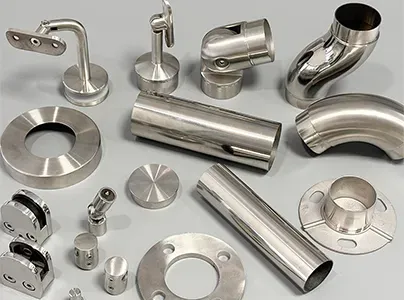
A fully integrated hardware system comprises discrete mechanical parts working in coordination. As a specialized manufacturer, our production scope spans several core assemblies:
A. Friction Stays and Casement Hinges
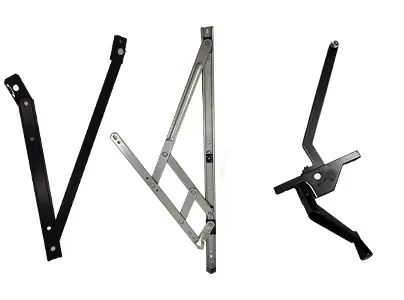
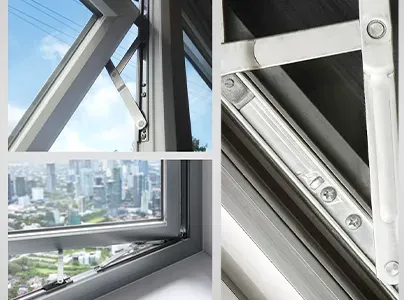
Friction stays are critical for project-out (awning) and side-hung casement windows. Engineered from heavy-gauge austenitic stainless steel (such as Grade 304 or Marine Grade 316), these mechanisms must maintain controlled friction to prevent wind gusts from slamming the sash open or shut.
- Geometry & Asymmetric Caps: Advanced hinge geometries incorporate asymmetric end caps to eliminate hinge deflection during initial pull-in, securing full weather-strip engagement.
- Track Strength: Reinforced slider channels resist deformation under continuous cyclic testing and localized wind shear.
B. Multipoint Locking Gearboxes and Transmission Rods
The central transmission mechanism (espagnolette) connects the handle to perimeter locking points. Precision machining ensures that gear tolerances prevent backlash and play. Adjustable eccentric roller cams allow field installers to fine-tune compression tolerances on-site, compensating for thermal expansion of framing materials across seasonal shifts.
C. Architectural Handles and Operators
Handles serve as the primary human-machine interface. Beyond aesthetic finishes, the internal mechanism requires high-tensile internal springs or detent mechanisms to guarantee crisp, 90-degree or 180-degree indexing. Die-cast zinc alloys (Zamak) and forged aluminum alloys provide the structural density required to withstand high-torque operation without fatigue failure.
D. Tilt-and-Turn Systems
Tilt-and-turn assemblies represent the pinnacle of European-style mechanical window engineering. By rotating a single handle, users can switch between:
- Turn Mode: Full side-hung opening for emergency egress and ventilation.
- Tilt Mode: Top-hung bottom-fixed ventilation that prevents rain ingress and unauthorized entry.
- Locked Mode: Full-perimeter perimeter engagement.
The system relies on corner drives with flexible spring steel strips, anti-mishandling safety devices, and integrated sash lifters that automatically correct slight sash sagging during closure.
3. Material Science and Surface Finishing: Battling Corrosion
Window hardware operates in demanding microclimates. Condensation inside window rebates, industrial airborne pollutants, and coastal salt spray will rapidly degrade low-grade metals. Hardware failure is almost never caused by structural yield; it is caused by electrochemical corrosion, galvanic reactions, and abrasive wear.
| Material / Coating Process | Primary Applications | Typical Corrosion Resistance (Salt Spray Test) | Distinct Functional Advantage |
| SS304 / SS316 Stainless Steel | Friction Stays, Structural Screws, Pivot Arms | 1,000+ hours (ASTM B117) | Superior tensile yield strength; inert against high coastal atmospheric salinity. |
| Die-Cast Zinc Alloy (Zamak 3 / 5) | Lock Bodies, Transmission Casings, Internal Cams | Dependent on secondary plating (240–480 hrs) | High fluid density during casting; permits complex internal geometries and tight tolerances. |
| Multi-Layer Nano Electroplating | Drive Rods, Espagnolettes, Keeper Plates | 480 to 960+ hours (Grade 4 / 5 EN 1670) | Hexavalent chromium-free zinc-nickel base with organic top-sealers for self-lubricating wear resistance. |
| Anodized / PVDF Coated Aluminum | Exterior Pulls, Architectural Handles | 1,000+ hours | UV-stable, high abrasion resistance, and exact color-matching to architectural profiles. |
Galvanic Isolation Protocols
When pairing stainless steel hardware with aluminum extrusions, the galvanic potential difference can induce galvanic corrosion in moist environments. Our hardware solutions integrate non-conductive composite shims, nylon isolation sleeves, and specially formulated anti-friction coatings to decouple dissimilar metals, preserving the envelope’s lifespan.
4. International Testing Standards and Compliance
For international fabricators and curtain wall contractors, hardware specification must satisfy regional building codes and independent performance standards. Our manufacturing and quality control regimes align with global industry benchmarks:
- EN 13126 (Building Hardware for Windows): Mandates rigorous cycle life benchmarks (Class 4/Class 5 durability testing up to 25,000 cycles) while monitoring operating torque degradation.
- AAMA 901 / 904 / 910 (North America): Verifies the structural integrity and operational force of casement rotos, balances, and multi-bar hinges under sustained wind pressure and load conditions.
- Burglar Resistance (PAS 24 & EN 1627 RC2/RC3): Incorporates mushroom-head locking cams, hardened anti-drill plates, and high-strength steel keeps designed to resist levering attacks with heavy crowbars and wedge tools.
5. Value Engineering for Window Fabricators: The OEM/ODM Advantage
Sourcing components from fragmented suppliers introduces variance in tolerances, finish mismatches, and supply chain delays. As an integrated manufacturer with end-to-end tooling, stamping, die-casting, and surface finishing capabilities, we resolve these challenges for B2B partners through three mechanisms:
Optimized Installation Ergonomics
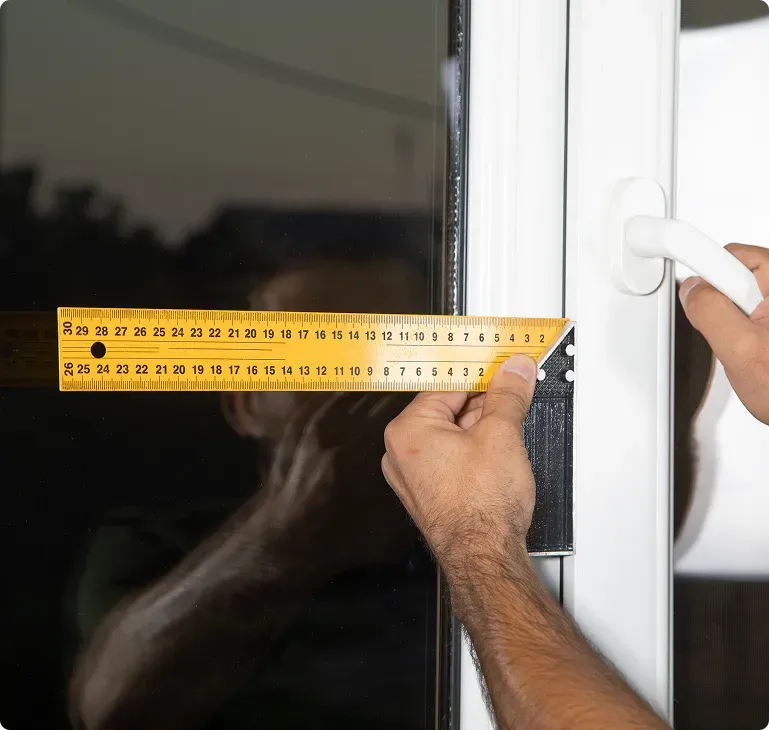
Labor costs represent a substantial percentage of total fenestration fabrication. Our hardware components are engineered with clamping mechanisms, non-directional eurogroove accessories, and snap-fit locator tabs. This eliminates manual measuring steps, reduces pre-drilling errors, and cuts down assembly line time per unit.
Custom Tooling and Extrusion Profiling
Different profile manufacturers—from standard 20mm/16mm Eurogrooves to custom American architectural profiles—exhibit distinct rebate depths and axis offsets (9mm, 13mm, etc.). Our dedicated engineering team collaborates directly with system houses to develop custom backsets, specialized corner transmissions, and unique handle geometries via rapid prototyping and in-house CNC mold manufacturing.
Supply Chain Traceability and Batch Consistency
Automated optical sorting, coordinate measuring machines (CMM), and digital torque testing guarantee that component tolerances stay within ±0.02 mm across multi-container production runs. Consistent tolerances prevent jamming on automated fabrication lines, reducing factory defect rates.
6. Sustainable Manufacturing and Future Trends in Fenestration
The fenestration sector is experiencing significant technological and environmental shifts. Modern window hardware must adapt to evolving market demands:
- Concealed Hardware Geometries: Contemporary architecture demands clean interior sightlines. Concealed tilt-and-turn hinges sit entirely inside the sash rebate, leaving no visible metal on the interior face. This improves aesthetic minimalism while ensuring continuous gasket runs unbroken by traditional hinge wraps, directly boosting thermal and acoustic performance.
- Smart Home and Mechatronic Integration: The line between mechanical hardware and building management systems (BMS) is blurring. Concealed mechatronic chain actuators, magnetic contact sensors, and micro-motorized lock drives allow operable windows to interface directly with automated HVAC cycles, indoor air quality (IAQ) sensors, and smart access control platforms.
- Material Circularity and Eco-Design: In line with global decarbonization goals, sustainable manufacturing demands the complete phase-out of hazardous chromates, the adoption of recyclable zinc and aluminum alloys, and the development of modular components that can be disassembled and remanufactured at the end of building lifecycles.
Building Enduring Partnerships in Window Hardware
In modern fenestration, the smallest mechanical components bear the greatest physical responsibility. A structural profile retains its shape, and high-efficiency glass provides thermal insulation, but it is the hardware that brings the entire system to life, operating reliably through tens of thousands of cycles across shifting seasons.
For system designers, window manufacturers, and architectural contractors, partnering with an experienced hardware manufacturer is the surest defense against on-site failures, warranty claims, and customer dissatisfaction. By combining metallurgy, precision manufacturing, and strict compliance verification, we build the reliable internal mechanisms that let high-performance windows perform as intended.
Contact our technical engineering team today to review our OEM/ODM capabilities, request custom 3D CAD libraries, or order testing samples for your next window series.